Design Operations |
|
From Ad-Hoc to Automated: Architecting the DesignOps Infrastructure that Scaled Dell’s Creative Velocity.
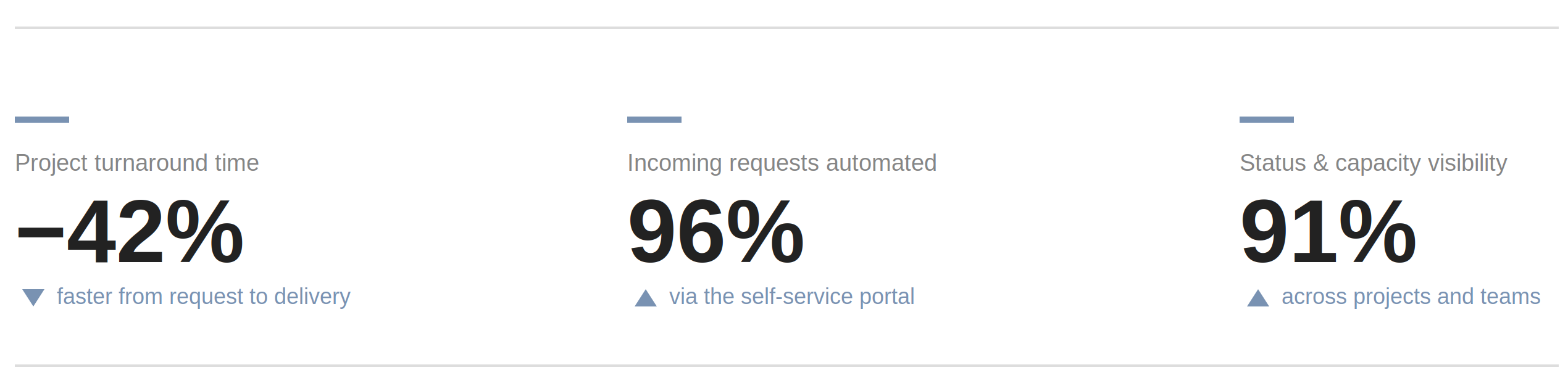
When I joined Dell, our 16-person design organization had no intake process, no capacity planning, and no single source of truth for work in flight. I built the team's design operations practice from scratch — process documentation, a Workfront implementation, formalized review cadences, and component governance. Our creative team was drowning in high-volume, low-complexity requests. Designers were bogged down by manual status updates, scattered feedback loops, and inconsistent asset handoffs. 40% of design time was lost to administrative logistics, resulting in burnout and delayed project timelines.
The Situation
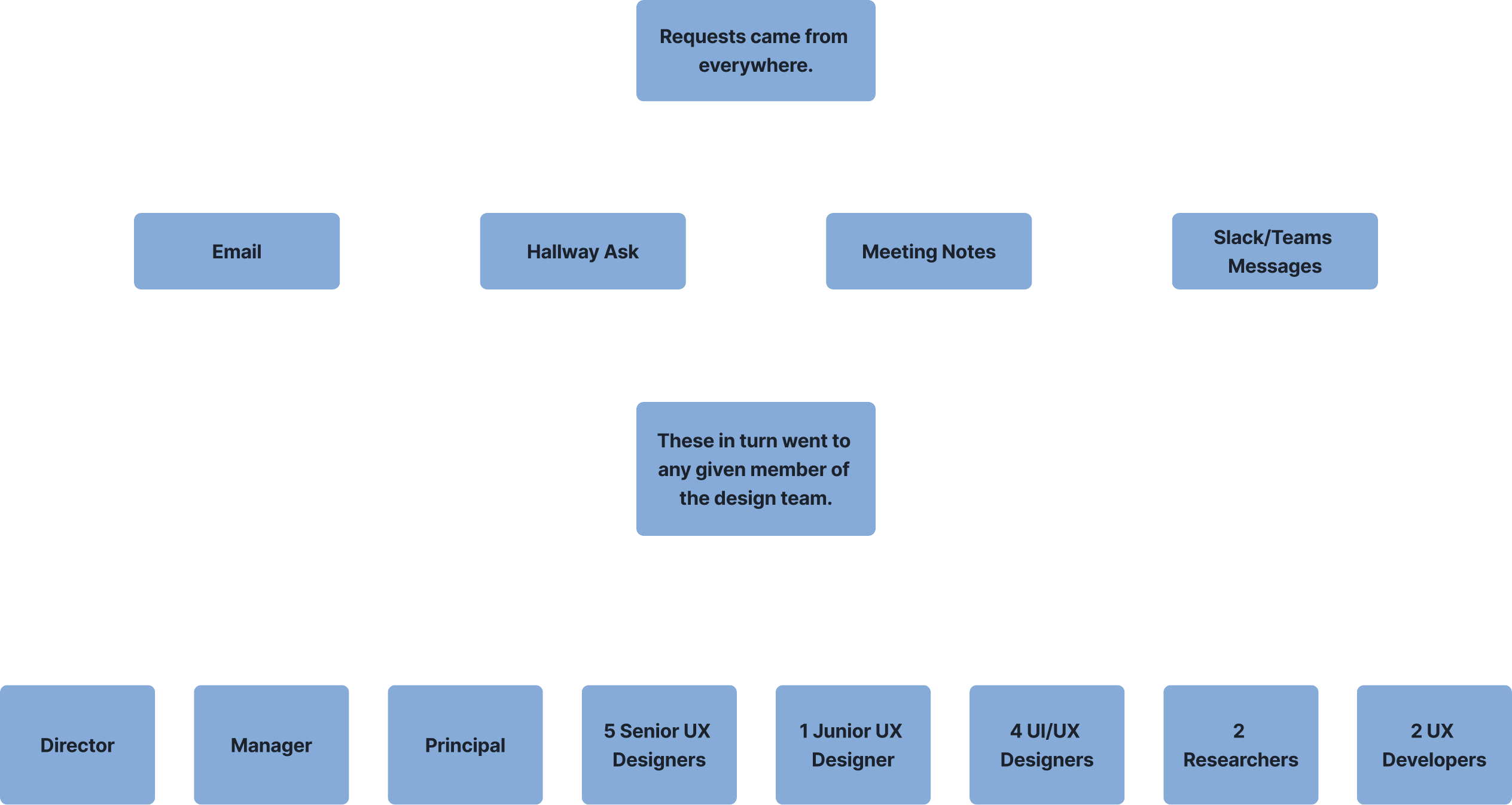
The design organization was 16 people strong: a director, a design manager, a principal UX designer, five senior UX designers, four UI/UX designers, a junior designer, two researchers, and two UX/front-end developers.
The talent was there. The infrastructure wasn't.
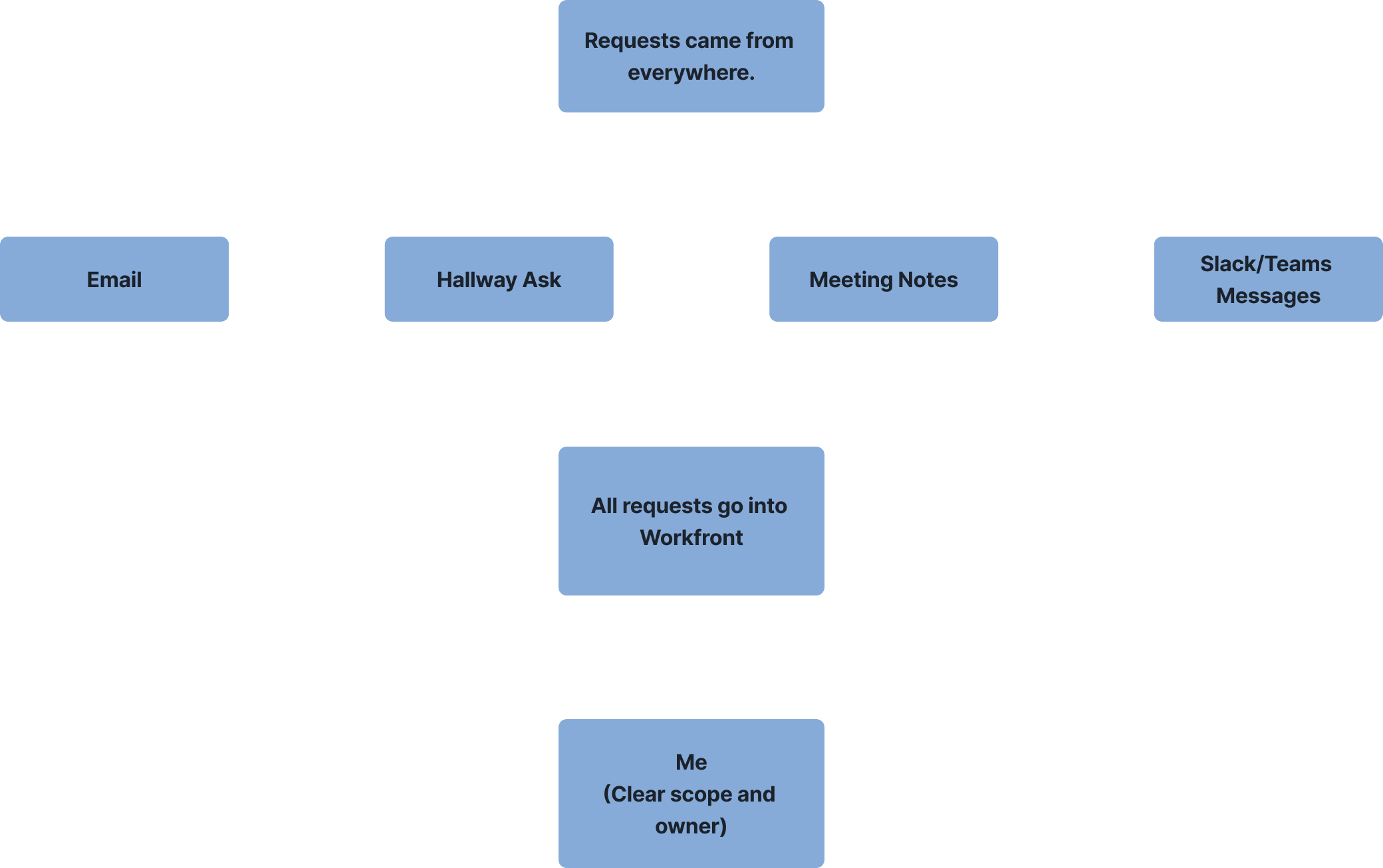
Work arrived through every channel imaginable — email, hallway conversations, meeting asides. There was no intake form, no project brief, no RACI. Nobody could answer basic questions: What's in the queue? Who has capacity? What shipped last month? Stakeholders had no visibility into their requests, and designers had no protection from scope creep or competing priorities.
Discovery: diagnosing before prescribing
Rather than importing a playbook, I started with listening.
Internal interviews. I sat down with every member of the design team and asked the same core questions: What's keeping you from completing work? What's confusing? What's broken that isn't a tool or hardware problem? That last framing mattered — it pushed the conversation past "we need better software" toward the process gaps underneath.
Stakeholder interviews. I also interviewed our external stakeholders, focusing on one measure: how confident are you that you know the status of the projects you've requested? The answer was a consistent, uncomfortable "not very."
Two truths emerged. Designers were losing time to ambiguity — unclear requests, unclear priorities, unclear ownership. And stakeholders had lost trust in the system because there was no system to trust.
What I built
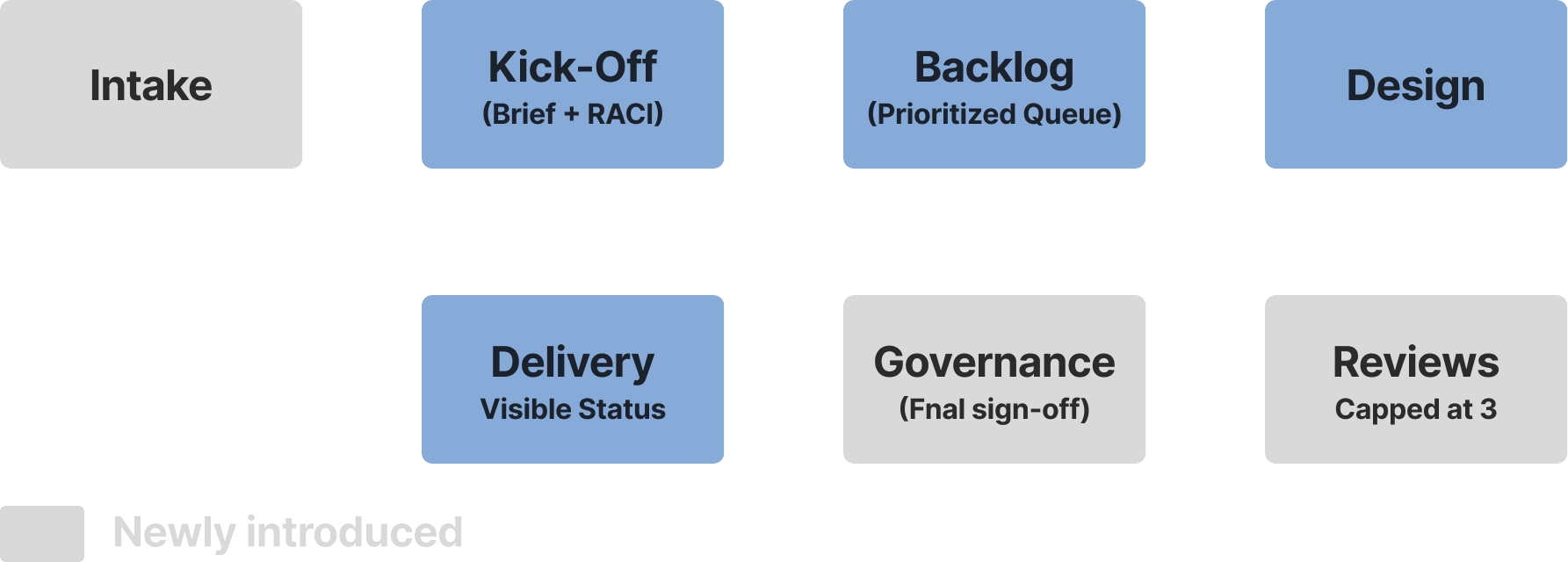
I focused on four foundational moves, sequenced so each one reinforced the next.
- Documented the end-to-end process
Before changing anything, I mapped how work actually flowed — from intake through backlog, active work, review, and delivery. This became the shared reference point for every conversation that followed. You can't fix a process nobody can see. - Implemented Workfront as the single source of truth
Partnering with our Workfront administrator (who handled system configuration), I designed the project templates — structured by project type and role — so that every request entered the same front door with the same required information. Intake, briefs, and assignments now lived in one place, visible to everyone. - Formalized the review cadence
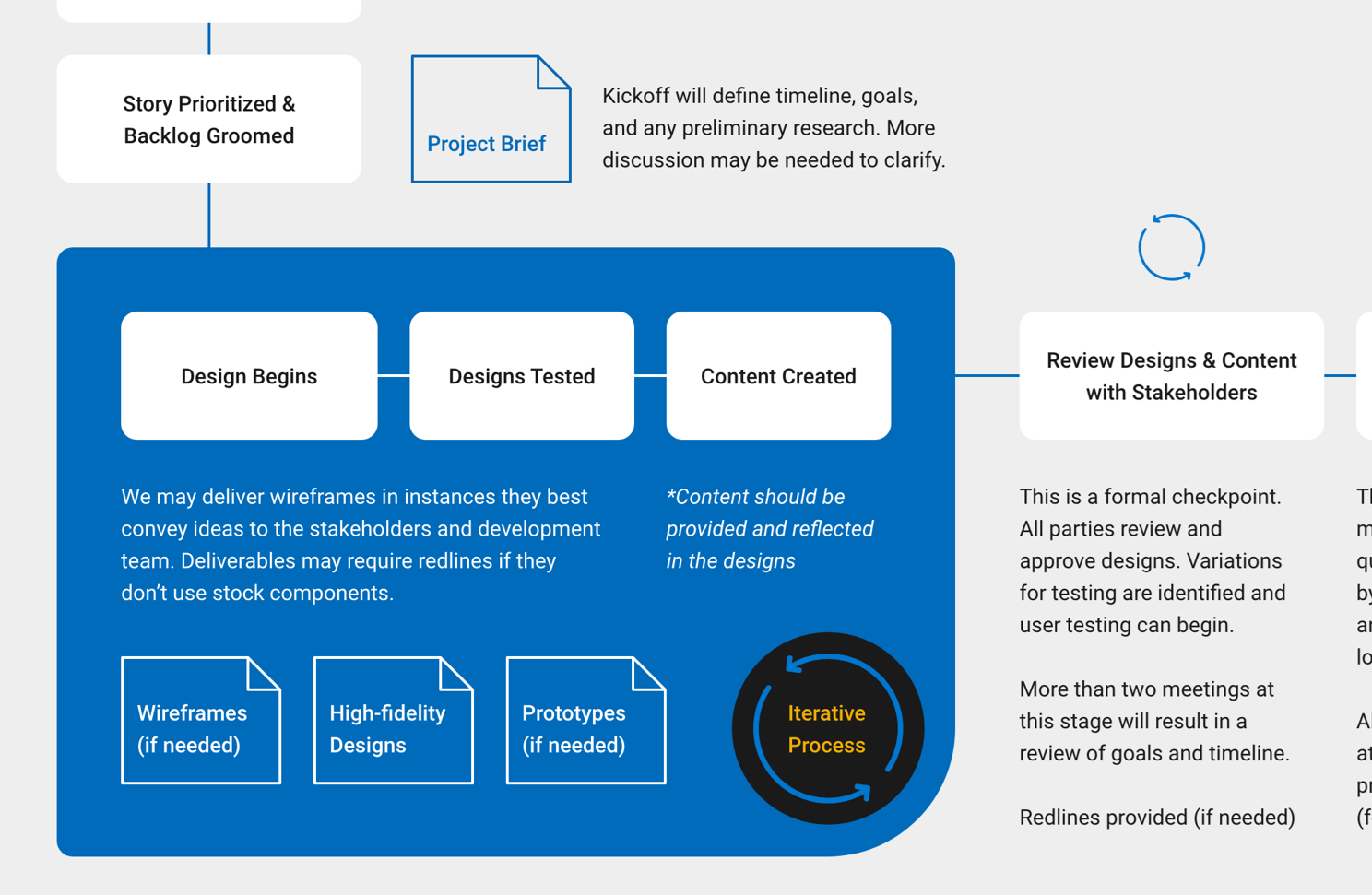
Reviews had been ad hoc: scheduled whenever, repeated indefinitely. I established a hard cadence with fixed dates and capped reviews at three per project. If alignment wasn't reached by the third review, the stakeholder and designer escalated together to design management — which doubled as a component governance checkpoint. The cap changed behavior: stakeholders came to reviews prepared, and feedback got consolidated instead of trickling in. - Created a component governance checklist
Every project had to build with existing AEM components by default. If a designer believed a new component was genuinely needed, there was now a defined process for proposing, evaluating, and creating it — protecting the design system from one-off sprawl while keeping a clear path for legitimate evolution.
Adoption and pushback
The team's response was telling: almost no internal resistance. The pain was so universally felt that the fix sold itself.
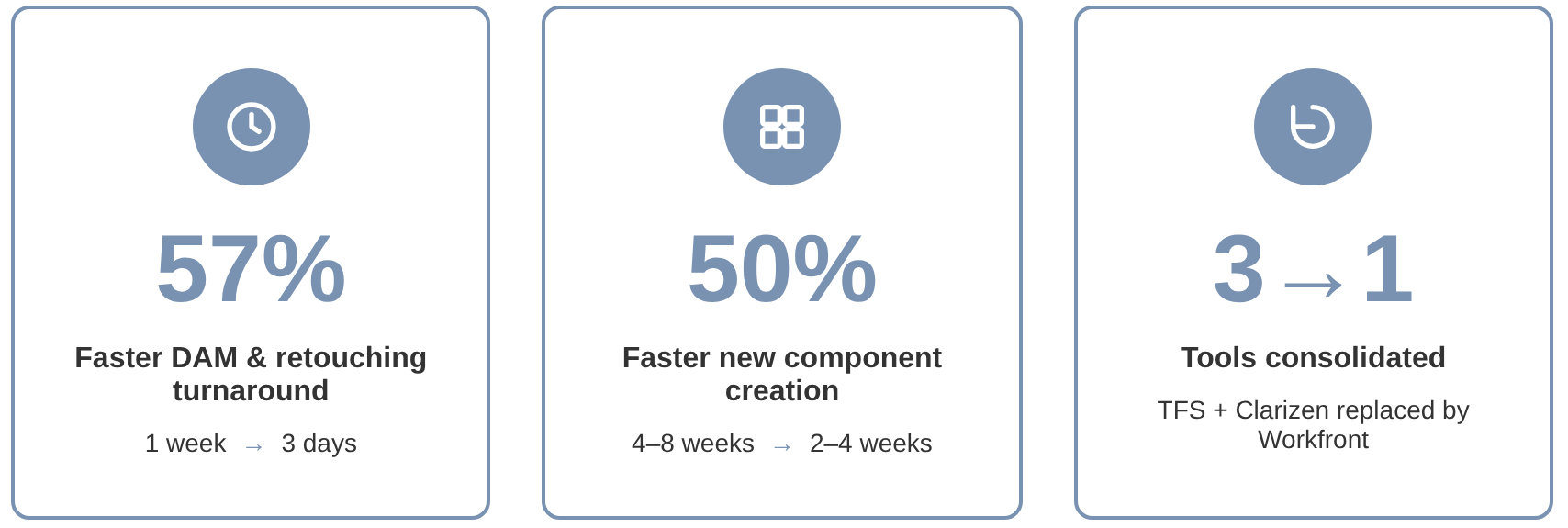
The friction came from stakeholders reluctant to learn a new tool. Rather than running Workfront alongside the old systems indefinitely — which would have quietly killed adoption — we deprecated TFS and Clarizen for creative projects entirely. With one system as the only path to getting design work done, adoption followed. The validation came later: the entire company eventually moved to Workfront, extending what began as a design team initiative into enterprise infrastructure.
Outcomes
Speed:
- DAM requests and image retouching turnaround dropped from 1 week to 3 days
- New component creation dropped from 4–8 weeks to 2–4 weeks, depending on complexity
- Every project now had a documented intake, brief, and owner
- Stakeholders could self-serve project status instead of chasing designers for updates
- Design management gained real capacity data for planning and prioritization
Visibility and trust:
Durability:
The Workfront implementation outlived the initiative, scaling from one team's workflow to the company-wide standard